
Children's Day Gothenburg: MingelBingo that activated the whole city festival
Children's Day turns central Gothenburg into a free city festival for families. MingelBingo was used to activate visitors and get them discovering more activities, stages and exhibitors during the day.
The background
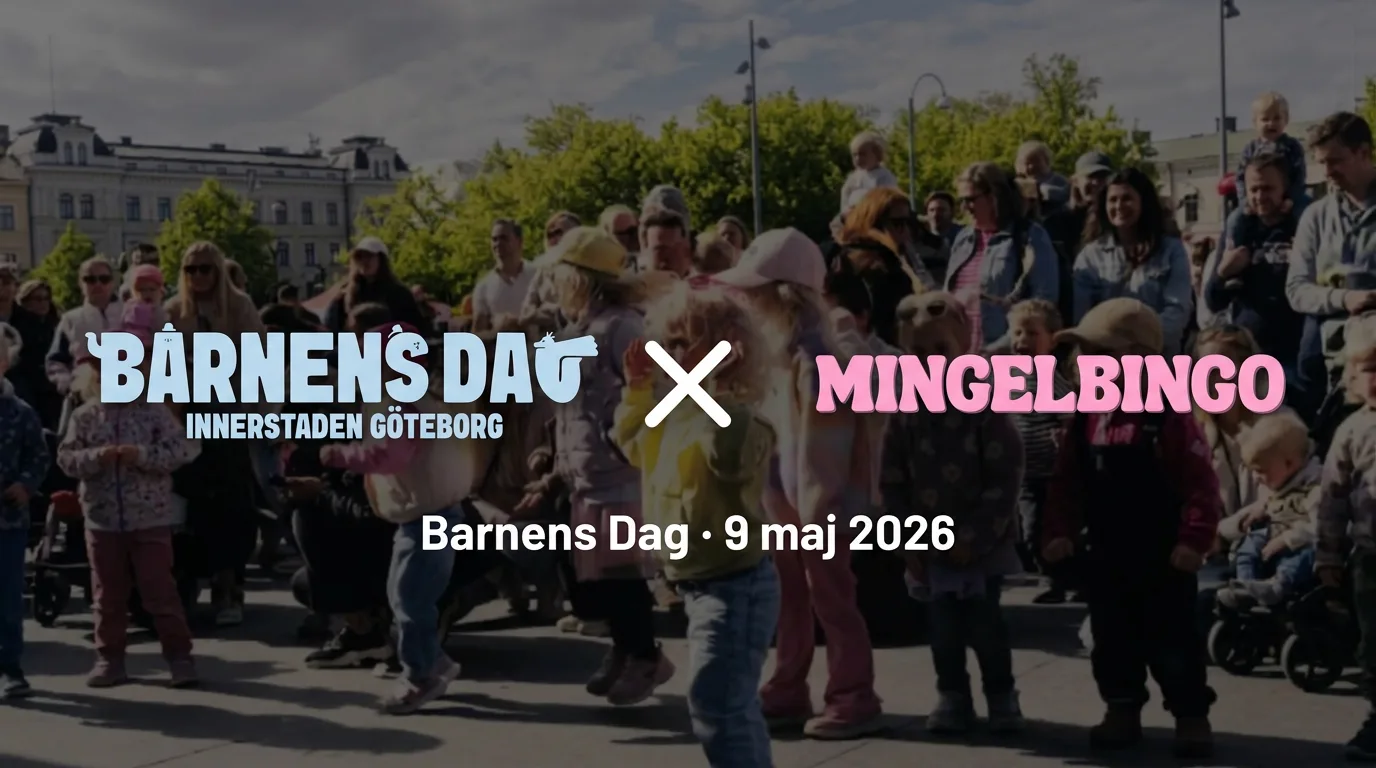
Children's Day Gothenburg is one of the city's largest free family events. For one day the city centre turns into a playful activity area where companies, associations and organisations gather around play, movement, creativity, learning and entertainment, free of charge for visitors.
The challenge
With lots of stations, stages and exhibitors spread across several places, Göteborgs Innerstad needed a simple way to activate guests and get more out of the event, something that tied the experience together and got families exploring more than they otherwise would have.
The solution
The bingo card was built around the day's highlights and artists. Every square became a small treasure hunt that drew families on to the next station.
The result
Children ran between sports stations, animals and mascots, creative workshops and stage performances, with the bingo card as their map. Parents said MingelBingo made it easier to get the children wanting to see the whole festival, not just the first stations they happened to find.
Visitors stayed longer, discovered more exhibitors and got a common thread through the whole festival. The businesses on site got more traffic and better conversations, and Göteborgs Innerstad got a concrete tool for measuring engagement during the day.
Children's Day shows how MingelBingo suits city festivals and public events: it creates movement, curiosity and meetings with no extra staff on site. The organiser plans to use MingelBingo again next year.
More who got people meeting and moving
Beijer Bygg
Beijer Hockey Games 2026: hundreds of spectators chased squares at the sponsor booths, with World Championship tickets as the prize.
Read the case study → Business adviceNyföretagarCentrum
A 25th anniversary at Billingehus where 80 percent of guests played and 40 percent got bingo.
Read the case study → City centreHBG City
Söderdagen in Helsingborg: a card with a map that led families between four places in the district.
Read the case study →
Digital mingle bingo: the game that gets people to meet, move around and discover more.